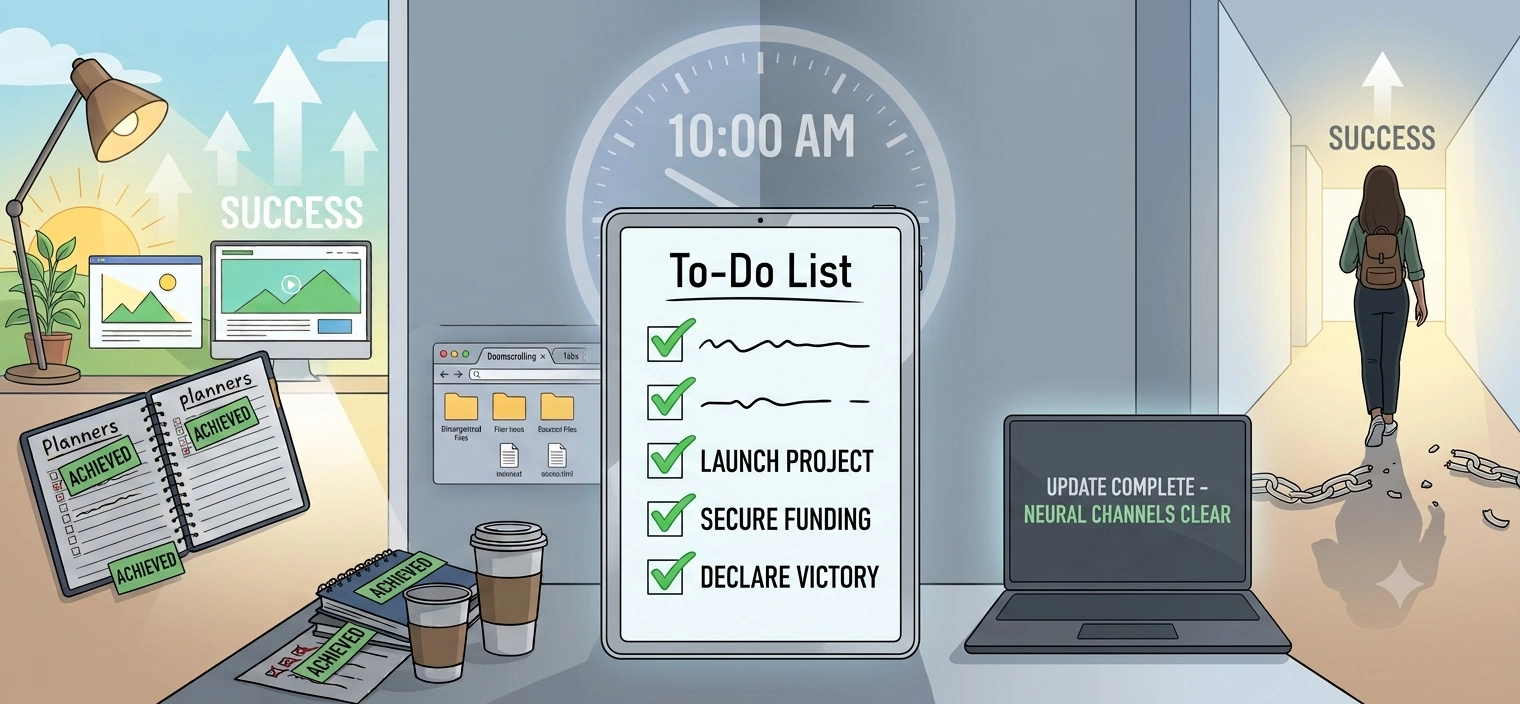
How to Overcome Limiting Beliefs: A 13-Step Guide
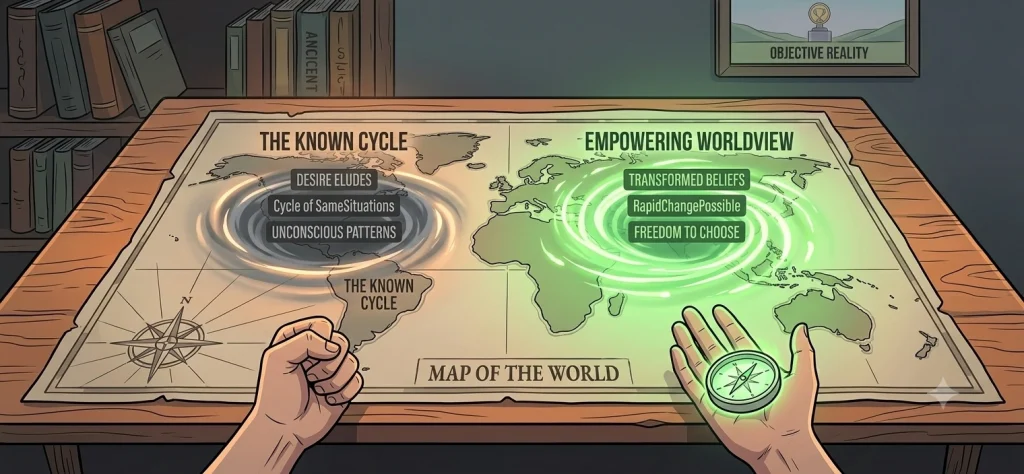
It often happens that what we desire eludes us, or we find ourselves trapped in the exact same cycle over and over again. Why do we act in one way and not another, and how can we change our behavior?
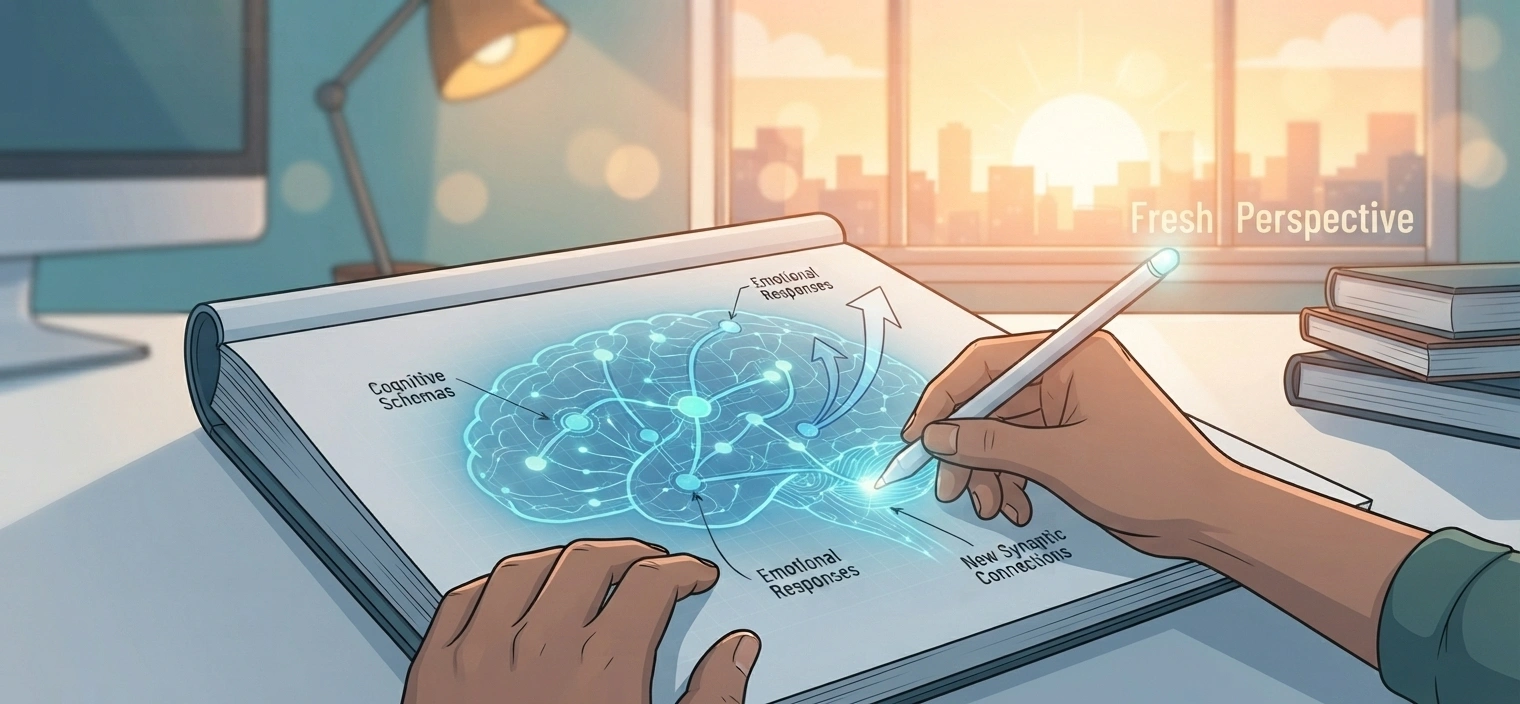
At the core of any behavior lies a system of beliefs. This system consists of both limiting and empowering beliefs. And it all lives inside our heads!
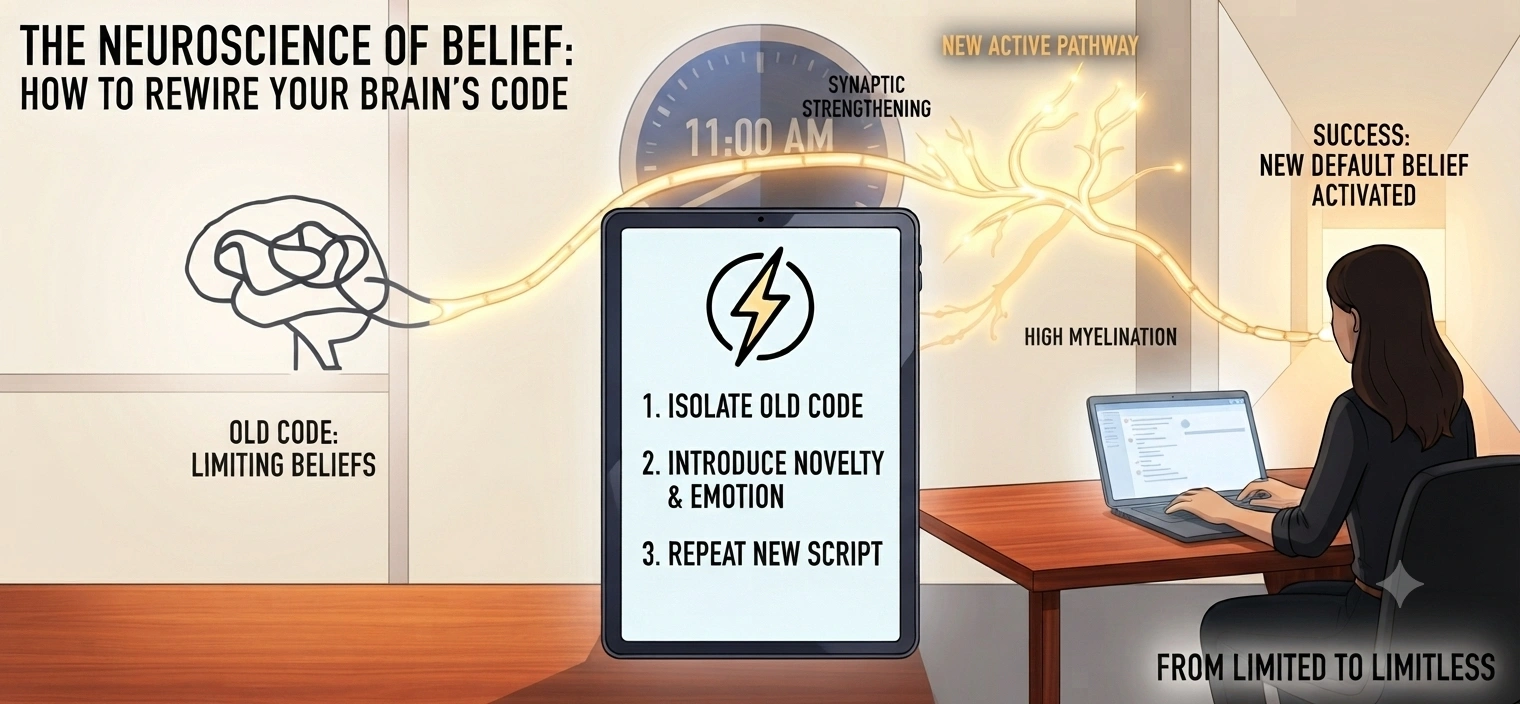
Fortunately, we can transform our limiting beliefs into positive ones, and we can do it quite rapidly. In fact, all of our beliefs naturally evolve over time. After all, neural patterns change on their own as the years pass—or do you still believe that Santa Claus exists?
Almost every event that happens in our lives is an unconscious reflection of our inner world. This means that all the results we see in our environment are, in essence, the direct consequence of our deepest beliefs.
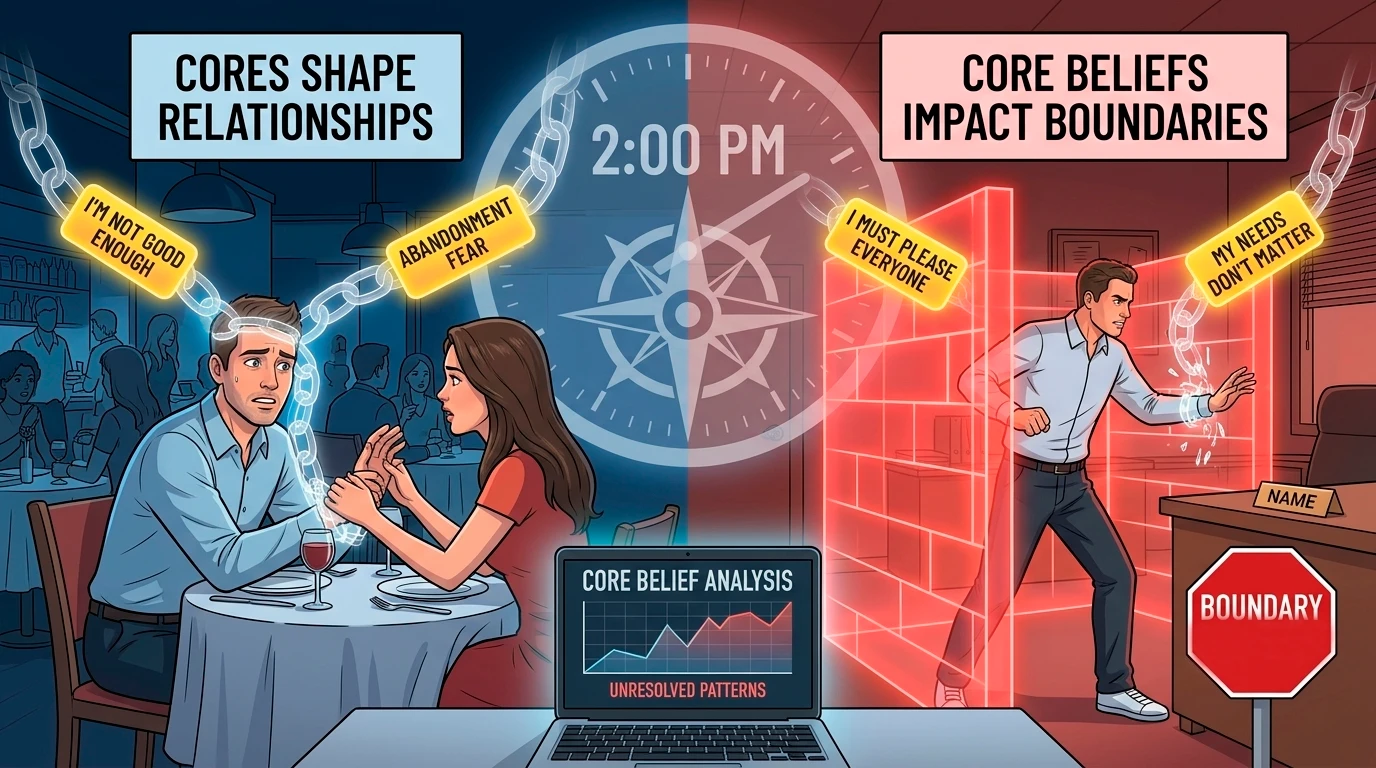
The purpose of beliefs (our internal rules) is to guide us through areas of life where we lack direct experience. Consequently, they exert a massive influence on our emotional state, our behavior, how we forecast the future, and how we perceive the present. Sometimes, they become an invisible barrier on the path to our goals.
Limiting Beliefs
Limiting beliefs are the convictions that prevent us from pursuing our goals and desires. They can stop you from taking important actions, hinder your success, and block your creative potential. For instance, they might keep you from searching for your dream job, gaining recognition, or building the relationships you truly want.
But where do limiting beliefs come from?
Quite often, these assumptions are formed during childhood within the family dynamic. Their emergence in our daily lives is heavily influenced by both our parents and our own past negative experiences.
On the flip side, some boundaries keep you from doing unimportant or dangerous things, like skydiving without preparation or walking down the street naked. In these cases, they simply serve our fundamental need for safety.
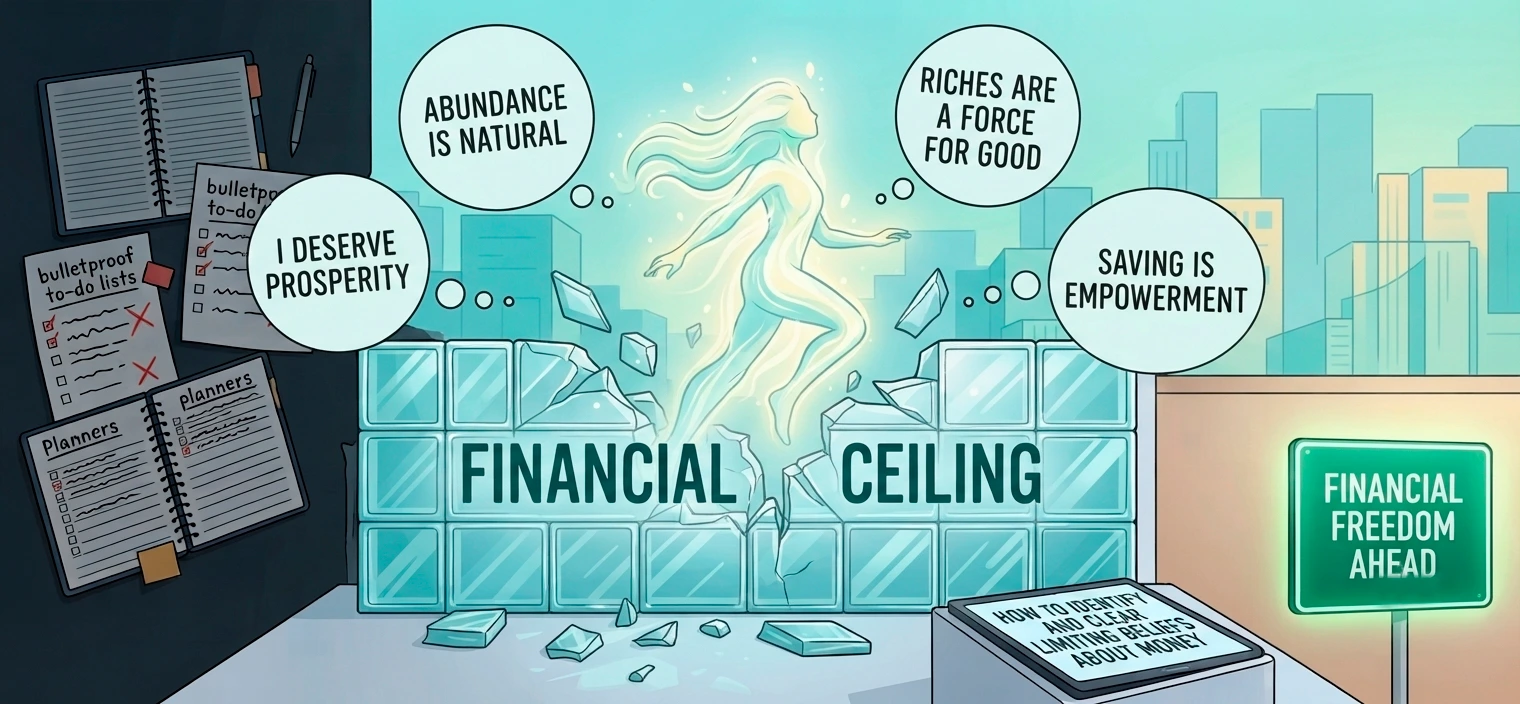
Our beliefs direct our focus of attention, setting the boundaries and constraints for what we consider reasonable, proper behavior. This can apply to money, health, relationships, and more.
For instance, my conviction that stealing is wrong keeps me from burgling an apartment. This is arguably a useful belief to hold. Consequently, we can say that not all limiting beliefs are harmful. In fact, we need some of them to, you know, keep us from doing foolish things.
The problem arises when other beliefs unnecessarily hold us back from becoming who we want to be.
The 3 Types of Limiting Beliefs
What we must recognize and understand is that limiting beliefs typically fall into three distinct categories:
1. Hopelessness
This is the conviction that a desired goal is fundamentally unattainable, regardless of your capabilities. For example: “This is impossible to achieve!”
2. Helplessness
This is the belief that while the desired goal is achievable for others, you personally lack the ability to reach it. For example: “Anyone can do it, except for me!”
3. Worthlessness
The belief that you do not deserve the desired goal due to some inherent personal flaws or shortcomings. For example: “I am not worthy of happiness or good health!”
Our beliefs are what we buy into at the deepest level, and they are structured as logical constructs. Examples include: “I am incapable of anything,” “Man is a wolf to man,” “Money comes easily!”, “You can’t earn much!”, “People can’t be trusted,” or “I am awesome!”
“Our beliefs and preconceptions are often a trap that limits our potential. The only knowledge capable of advancing us on the path of development is the knowledge that the imagination is capable of anything. And everything that is possible in our imagination is possible in reality.” — Albert Einstein, Scientist
The vast majority of our core, deep-seated beliefs exist in the unconscious mind (the subconscious), meaning we can fully believe in them without ever realizing they are there.

How to Change Limiting Beliefs
How can you overcome, eliminate, or rewrite your false beliefs, and do it quickly? Are there specific techniques or methods for shifting your mindset?
Consciously, we can only change what we are actually aware of. Therefore, the first crucial question is: how do you identify and become aware of your limiting beliefs?
Once these beliefs are brought to light, we can begin working on them. In psychology, there is no shortage of techniques and affirmations designed to reshape your mindset and core assumptions.
Here is an exercise I suggest you try right now:
Think of a problem area in your life—a sphere where you aren’t getting what you want—and ask yourself this critical question: “What do I truly think about this? Why is this happening?”
These questions will help you pinpoint and unearth your negative mindsets. Write down every single answer that pops into your head, by hand, on a piece of paper.
Example:
- Problem area: Career/Job.
- What do I think about this? — “It’s hard to land a good job.”
- Why is this happening? — “People don’t quit good positions.”
As a result, we unearth an outdated belief: “It’s hard to land a good position because people never leave them.”
Now, to investigate this limiting belief and shake its foundations, you simply need to run it through the reframing matrix (sleight of mouth matrix) presented below.
Your Limiting Belief: “It’s hard to get a good job because there are no openings, as people never quit them.”
| Question | Your Answer |
| 1. What? Who? When? In what way? | What does ‘hard’ even mean? What does it mean that there are ‘no positions available’? When is it hard? In what way is it hard? What exactly defines a ‘good job’? |
| 2. Are there instances where this was actually possible? | People have easily landed great jobs whenever a new position opened up |
| 3. What significant goal am I pursuing here? | By thinking this way, I’m simply trying to avoid putting in any effort. I just want everything to be done for me |
| 4. What outcomes will this ultimately lead to? | If I keep holding onto this worldview, I will stop looking for great opportunities entirely and spend the rest of my life stuck at my old job |
| 5. What is more important than this belief? | It is far more important that I deeply want to work in a high-paying position, regardless of whether it’s difficult or not |
| 6. Everyone? Always? In every single case? | Is it hard for everyone to get hired? Is it always difficult? Any worthwhile endeavor requires investing some amount of effort |
| 7. What would happen if you didn’t need to think this way? What forces you to think like this? | If I didn’t have to cling to this belief, landing a job would feel like an ordinary task, as simple as taking out the trash. It’s my laziness that forces me to think it’s hard; in reality, it’s easy |
| 8. Is this worldview useful to me? Does it bring me any value? | Believing that finding a good position is impossible is highly damaging to my life. This thought completely strips me of opportunities |
| 9. Could it be both things simultaneously, just from different perspectives? | Settling into a great career can be both easy and difficult at the same time. The real task is to figure out exactly what parts are hard and what parts are easy |
| 10. What if this wasn’t real, or if it didn’t exist at all? | If this idea didn’t exist, I would look at getting a job as a routine, simple action—just like brushing my teeth |
| 11. What if you actually could do it? | If I had the chance right now, I would go out and get hired immediately |
| 12. What other factors influence this belief? | I believe it’s hard because it’s comfortable and convenient for me to think so. This perception of the world simply fuels and protects my laziness |
| 13. Is it possible that you just chose to look at it this way? Is this truly what you want? | I don’t want to believe that finding a job is difficult. I am making a conscious decision to believe that landing a job is a straightforw |
This matrix of questions is built upon Robert Dilts’ “Sleight of Mouth” (linguistic patterns) and L. Michael Hall’s “Mind Lines.”
By simply running any of your own or someone else’s limiting beliefs through this questionnaire step-by-step, you will subject it to deep transformation. As a result, you will regain the mental freedom and the power of choice over how you perceive and think about the world around you.
Ultimately, consistent daily practice will leave your map of the world completely free of limiting beliefs!
Try it for FREE and see how simple it is to rewire negative mindsets. All it takes is 20 minutes!

UP TO 97% OF BELIEFS IN A MONTH!
Transform your Limiting Beliefs using the BCS Online Service
A Simple and Effective Tool for self-reprogramming negative mindsets
I want to try it!